

What is the suction capacity of plastic helix suction hoses?
As a supplier of plastic helix suction hoses, I often encounter inquiries from customers regarding the suction capacity of these hoses. Understanding the suction capacity is crucial as it directly impacts the efficiency and effectiveness of various applications where these hoses are used. In this blog post, I will delve into the factors that influence the suction capacity of plastic helix suction hoses and provide insights to help you make informed decisions.
Factors Affecting Suction Capacity
Hose Diameter
One of the most significant factors influencing the suction capacity of a plastic helix suction hose is its diameter. A larger diameter hose generally allows for a higher flow rate of the substance being suctioned. This is because a wider passageway reduces the resistance to the flow of materials, enabling more volume to pass through in a given period. For instance, if you are using a hose to suction water from a large tank, a hose with a larger diameter will be able to transfer more water per minute compared to a smaller - diameter hose.
Hose Length
The length of the hose also plays a vital role in determining its suction capacity. As the length of the hose increases, the resistance to the flow of the substance being suctioned also increases. This is due to the friction between the material and the inner walls of the hose. Longer hoses require more energy to maintain the same flow rate as shorter ones. Therefore, when selecting a plastic helix suction hose, it is essential to consider the distance between the suction source and the destination. If the distance is long, a larger - diameter hose may be necessary to compensate for the increased resistance.
Material of the Hose
The material from which the plastic helix suction hose is made can significantly affect its suction capacity. Different materials have different levels of smoothness on the inner surface, which impacts the friction experienced by the flowing substance. For example, hoses made from high - quality PVC (polyvinyl chloride) tend to have a smoother inner surface compared to some other plastics. This smoothness reduces friction, allowing for a more efficient flow of materials and thus increasing the suction capacity.
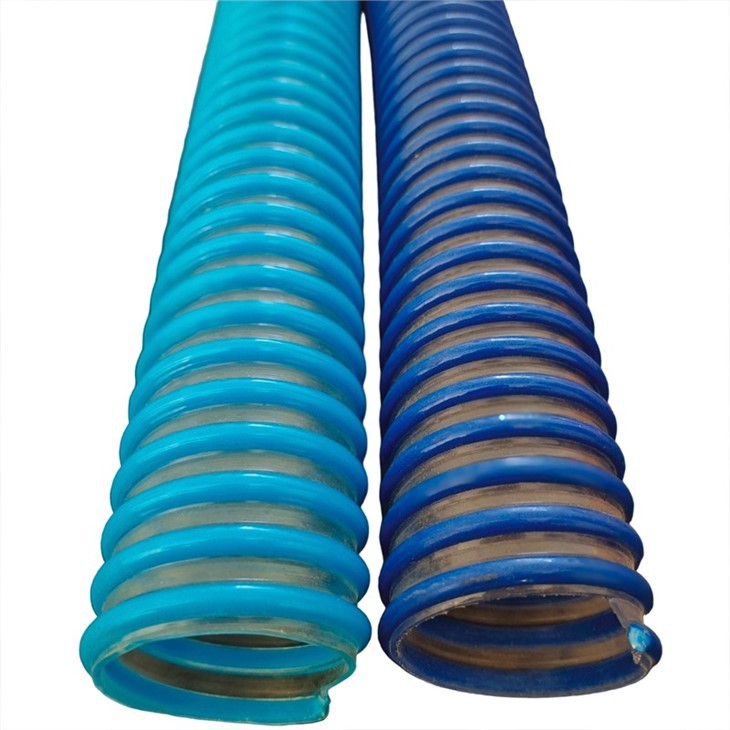

We offer a variety of PVC - based plastic helix suction hoses, such as the PVC Food Grade Helix Suction Hose, which is designed for applications where food - grade materials are required. The high - quality PVC used in this hose ensures a smooth inner surface for efficient suction of food products. Another option is the PVC Low Temperature Helix Suction Hose, which is suitable for use in cold environments. The material properties of this hose are optimized to maintain its suction capacity even at low temperatures.
Reinforcement of the Hose
Many plastic helix suction hoses are reinforced to enhance their strength and durability. The type and degree of reinforcement can also impact the suction capacity. For example, a PVC Helix Spiral Braid Reinforced Suction Hose has a spiral braid reinforcement that provides additional strength. While the reinforcement may slightly increase the stiffness of the hose, it can also help maintain the shape of the hose under suction pressure. This ensures that the inner diameter of the hose remains consistent, which is important for maintaining a stable suction capacity.
Measuring Suction Capacity
The suction capacity of a plastic helix suction hose is typically measured in terms of flow rate, which is the volume of the substance that can be suctioned per unit of time. Common units for measuring flow rate include liters per minute (L/min) or gallons per minute (GPM). To accurately measure the suction capacity of a hose, you need to consider the factors mentioned above and use appropriate equipment such as flow meters.
When testing the suction capacity, it is important to simulate the actual operating conditions as closely as possible. This includes using the correct type of substance to be suctioned, the appropriate length and diameter of the hose, and the same suction pressure that will be used in the real - world application.
Applications and Suction Capacity Requirements
Different applications have different requirements for suction capacity. For example, in industrial applications such as chemical transfer or wastewater management, high - suction capacity hoses are often needed to handle large volumes of fluids quickly. In these cases, hoses with larger diameters and appropriate reinforcement are preferred.
On the other hand, in smaller - scale applications like aquarium water changes or small - scale laboratory work, lower - suction capacity hoses may be sufficient. These hoses can be smaller in diameter and length, and may not require as much reinforcement.
Choosing the Right Plastic Helix Suction Hose
When choosing a plastic helix suction hose, it is essential to consider your specific application requirements. First, determine the type of substance you will be suctioning. If it is a food product, a food - grade hose like the PVC Food Grade Helix Suction Hose is necessary. If you will be working in cold environments, the PVC Low Temperature Helix Suction Hose is a better choice.
Next, calculate the required suction capacity based on the volume of the substance you need to transfer per unit of time. Consider the distance between the suction source and the destination to determine the appropriate hose length. Based on these factors, select the hose diameter and reinforcement level that will meet your requirements.
Conclusion
The suction capacity of plastic helix suction hoses is influenced by several factors, including hose diameter, length, material, and reinforcement. By understanding these factors and carefully considering your application requirements, you can choose the right hose to ensure efficient and effective suction.
If you are in the market for a plastic helix suction hose and need further assistance in selecting the right product for your needs, we are here to help. Our team of experts can provide you with detailed information and guidance to ensure that you make the best choice. Contact us to start a discussion about your specific requirements and let us help you find the perfect plastic helix suction hose for your application.
References
- "Fluid Mechanics" by Frank M. White
- "Handbook of Polymer Science and Technology" edited by James E. Mark


