

As a supplier of PVC Layflat Hose (6bar), I've witnessed firsthand the importance of understanding how the flexibility of this product changes with temperature. PVC Layflat Hoses are widely used in various industries, including agriculture, construction, and water management, due to their lightweight, durable, and cost - effective nature. However, temperature can significantly impact their performance, especially flexibility.
The Basics of PVC Layflat Hose (6bar)
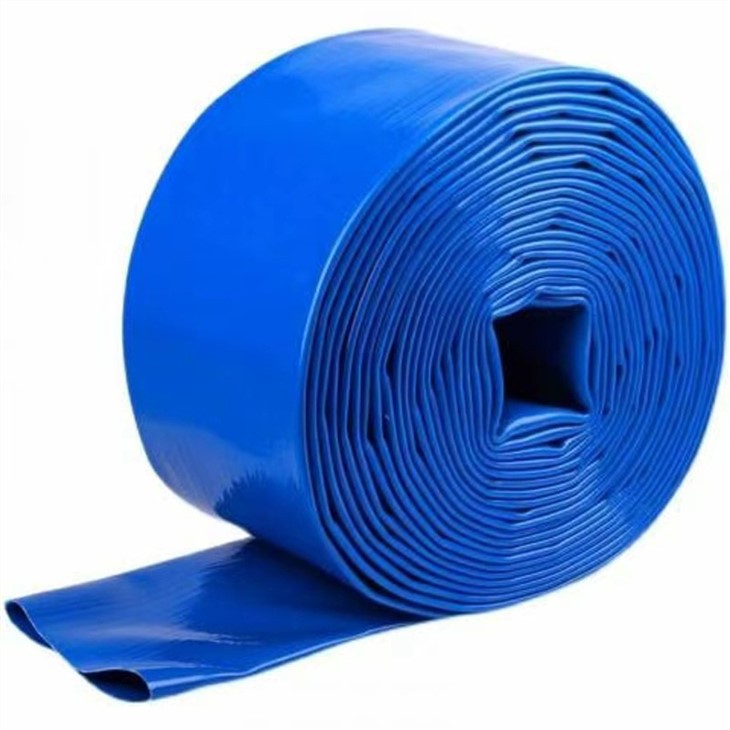
PVC, or polyvinyl chloride, is a synthetic plastic polymer that is commonly used in the manufacturing of hoses. The "6bar" rating indicates the maximum pressure that the hose can withstand. PVC Layflat Hoses are designed to be flat when not in use, which makes them easy to store and transport. When filled with fluid, they expand to their circular shape, allowing for efficient fluid transfer.
One of the key advantages of PVC Layflat Hoses is their flexibility. This flexibility enables easy installation, even in tight spaces or around obstacles. It also reduces the risk of kinking, which can impede the flow of fluid through the hose. But this flexibility is not a constant; it varies with temperature.
The Impact of Low Temperatures on Flexibility
At low temperatures, PVC Layflat Hoses become stiffer. PVC is a thermoplastic material, which means its physical properties change with temperature. As the temperature drops, the molecules in the PVC material slow down and become more tightly packed. This reduces the mobility of the polymer chains, making the hose less flexible.
In extremely cold conditions, the hose may become so stiff that it is difficult to bend or maneuver. This can pose significant challenges during installation. For example, in winter months in regions with cold climates, farmers using PVC Agriculture Irrigation Layflat Soft Cloth Lay Flat Water Discharge Pump Hose may find it difficult to lay out the hoses in the fields. The stiffness can also increase the risk of cracking or splitting if the hose is forced to bend.
Moreover, the reduced flexibility at low temperatures can affect the hose's ability to seal properly. A less flexible hose may not conform well to connectors, leading to leaks. This is a serious issue, especially in applications where a tight seal is crucial, such as in water supply systems or chemical transfer.
The Impact of High Temperatures on Flexibility
Conversely, at high temperatures, PVC Layflat Hoses become more flexible. As the temperature rises, the molecules in the PVC gain more energy and start to move more freely. The polymer chains can slide past each other more easily, increasing the flexibility of the hose.
While increased flexibility may seem like an advantage, it can also lead to problems. At very high temperatures, the hose may become too flexible and lose its shape. It may sag or deform under its own weight or the pressure of the fluid inside. This can cause blockages in the hose, reducing the flow rate and potentially damaging the hose.
Additionally, high temperatures can accelerate the degradation of the PVC material. Prolonged exposure to heat can cause the plasticizer in the PVC to migrate out of the material, leading to embrittlement over time. This means that although the hose may be more flexible in the short term at high temperatures, its long - term durability is compromised.
Testing and Measuring Flexibility Changes
To understand how the flexibility of PVC Layflat Hose (6bar) changes with temperature, we conduct a series of tests. We use a bending test apparatus, which measures the force required to bend the hose at different angles. We test the hoses at a range of temperatures, from below freezing to above normal operating temperatures.
The results of these tests are used to create a temperature - flexibility curve. This curve shows the relationship between temperature and the flexibility of the hose. It allows us to predict how the hose will perform at different temperatures and to provide accurate guidelines to our customers.

For example, if a customer is planning to use our PVC Layflat Hose in a cold climate, we can refer to the temperature - flexibility curve to recommend the best installation practices. We may suggest pre - warming the hose or using additional insulation to maintain its flexibility.
Practical Considerations for Customers
When customers are selecting a PVC Layflat Hose, they need to consider the temperature conditions in which the hose will be used. If the hose will be exposed to low temperatures, they may want to choose a hose with better cold - resistance properties. Our PVC Flat Hose is available in different formulations, some of which are specifically designed for cold - weather use.
On the other hand, if the hose will be used in high - temperature environments, customers should be aware of the potential for increased flexibility and degradation. They may need to take precautions such as providing shade or using heat - resistant coatings.
We also offer PVC Layflat Hose (8 - 10bar) for applications where higher pressure is required. These hoses also exhibit temperature - dependent flexibility changes, but their thicker walls may provide some additional resistance to temperature - related issues.
Conclusion and Call to Action
In conclusion, the flexibility of PVC Layflat Hose (6bar) is highly dependent on temperature. Understanding this relationship is crucial for ensuring the proper installation and long - term performance of the hose. Whether you are in the agriculture, construction, or water management industry, choosing the right hose for your temperature conditions is essential.
If you are interested in learning more about our PVC Layflat Hoses or have specific requirements for your project, we invite you to contact us for a detailed discussion. Our team of experts is ready to assist you in selecting the most suitable hose for your needs and to provide you with all the necessary technical support.
References
- "Plastics Engineering Handbook", Third Edition, by Joel R. Fried.
- "Polyvinyl Chloride (PVC) - Properties, Applications, and Environmental Impact", Journal of Polymer Science.
- Industry reports on PVC Layflat Hose performance in different temperature conditions.


