

When it comes to industrial hoses, one of the products that often comes into question for multiple applications is the PVC Layflat Hose (8 - 10bar). As a reliable supplier of these hoses, I've been frequently asked whether this type of hose is suitable for vacuum applications. In this blog, I'll delve into the characteristics of PVC Layflat Hoses (8 - 10bar), how they fare under vacuum conditions, and what factors you need to consider.
Understanding PVC Layflat Hoses (8 - 10bar)
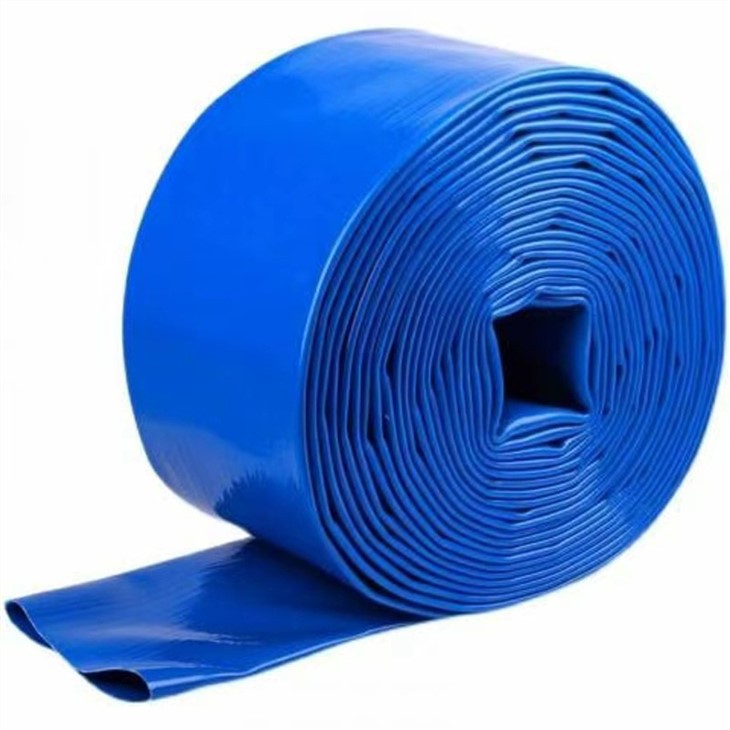
PVC Layflat Hoses are known for their lightweight, flexibility, and cost - effectiveness. They consist of a polyvinyl chloride (PVC) inner tube and outer cover, often reinforced to withstand pressure. The 8 - 10bar rating indicates the maximum pressure the hose can handle without bursting or experiencing significant degradation under normal operating conditions. This rating makes them suitable for a variety of pressure - based applications, such as water transfer in agricultural, construction, or industrial settings. For instance, they can be used to transfer water from a reservoir to a field for irrigation or to empty a temporary water tank at a construction site.
The PVC Layflat Hose (8 - 10bar) we supply is built with high - quality materials. The PVC compound used is resistant to abrasion, which helps in prolonging the lifespan of the hose, especially when it is dragged across rough surfaces. The reinforcement layer, usually made of synthetic yarns, gives it the strength to maintain its shape under pressure. Some of our customers have used these hoses for extended periods without experiencing any structural failures during normal pressure applications.
Factors Affecting Suitability for Vacuum Applications
To determine whether the PVC Layflat Hose (8 - 10bar) is suitable for vacuum applications, we need to examine several factors.
1. Collapse Resistance
One of the main challenges in vacuum applications is preventing the hose from collapsing. When there is a vacuum inside the hose, the external atmospheric pressure tries to crush the hose. The design and construction of the PVC Layflat Hose (8 - 10bar) play a crucial role in its collapse resistance. Our hoses have a multi - layer structure, and the reinforcement layer provides some degree of rigidity. However, compared to hoses specifically designed for vacuum applications, the collapse resistance might be limited.
For instance, in some moderate vacuum scenarios where the pressure differential is not extremely high, our hose can maintain its shape. But in high - vacuum environments, say approaching near - absolute zero pressures, the hose may start to collapse. The degree of collapse can range from partial flattening to complete closure of the hose lumen, which would impede the flow of air or other substances being transferred.
2. Material Properties
The PVC used in our hoses is formulated to be flexible and durable. But under vacuum conditions, the material may face additional stress. The reduction in pressure can cause the PVC to contract slightly, and if the pressure differential is significant, it can lead to material fatigue over time. This may result in cracks or leaks in the hose. Moreover, PVC is sensitive to temperature changes. In cold weather, the material becomes more brittle, and in high - temperature vacuum applications, it may soften, both of which can affect the performance of the hose under vacuum.
3. Joint and Connection Integrity
In vacuum applications, airtight joints and connections are essential. Even a small leak can disrupt the vacuum and reduce the efficiency of the system. Our PVC Layflat Hoses come with standard fittings and connections that are designed to be secure. However, the effectiveness of these connections under vacuum conditions depends on proper installation and maintenance. If the connections are not tightened correctly or if the gaskets are damaged, air can seep in, nullifying the vacuum.
Alternatives and Complementary Products
If the PVC Layflat Hose (8 - 10bar) is not fully suitable for high - end vacuum applications, there are alternatives. For periodic low - vacuum applications, the 3 Lay Flat Hose can be considered. It has an additional layer of reinforcement, which enhances its collapse resistance to some extent.
For continuous and high - vacuum operations, hoses made of materials like neoprene or silicone with specialized helix reinforcement are better options. These hoses are designed to withstand extreme pressure differentials and are less likely to collapse or develop leaks. However, they are generally more expensive than our PVC Layflat Hoses.
Another option is to use our PVC Layflat Hose (8 - 10bar) in combination with other components such as vacuum breakers or pressure regulators. These devices can help control the pressure inside the hose and prevent it from experiencing excessive stress, thus extending its usability in certain vacuum applications.

Case Studies
To illustrate the performance of our PVC Layflat Hose (8 - 10bar) in real - world scenarios, let's look at a few case studies.
A customer in the agriculture sector used our hose for a soil aeration project. The system required creating a mild vacuum to draw air through the soil. In this application, the pressure differential was relatively low, and the hose performed well over several months. There was minimal collapse, and the flow of air was consistent. The lightweight nature of the hose also made it easy for the workers to move and install the system.
On the other hand, a customer in the chemical industry wanted to use our hose for a vacuum filtration process. The vacuum requirements were much higher, and within a few days of operation, they noticed some flattening of the hose. This led to reduced flow efficiency and had to be addressed by adjusting the vacuum level and implementing a more rigid support system for the hose.
Determining the Feasibility for Your Application
Before deciding whether to use the PVC Layflat Hose (8 - 10bar) for a vacuum application, you need to assess the specific requirements of your project.
- Define the Vacuum Requirements: Determine the level of vacuum required, the pressure differential, and whether it will be a continuous or intermittent process.
- Evaluate the Environment: Consider the temperature, humidity, and any exposure to chemicals or other substances that may affect the hose.
- Analyze the Flow Requirements: Understand the volume and type of material (air, gas, or liquid) that will be transferred through the hose.
Based on these factors, you can make an informed decision. In some cases, our PVC Layflat Hose (8 - 10bar) may be a cost - effective solution for your vacuum application. In others, you may need to explore alternative hoses.
Complementary Products for Vacuum Applications
In addition to the PVC Layflat Hose (8 - 10bar), we also offer complementary products that can enhance its performance in vacuum - related scenarios. For example, our Flat Discharge Hose can be used in combination with our primary hose to optimize the flow at the discharge end. This type of hose is designed to have a larger cross - sectional area, which can reduce the back - pressure and improve the overall efficiency of the system when transferring substances under vacuum.
Conclusion
In conclusion, the PVC Layflat Hose (8 - 10bar) has both capabilities and limitations when it comes to vacuum applications. In moderate vacuum conditions with proper oversight and in combination with some additional components, it can be a practical choice. But for high - vacuum, continuous, and critical applications, it may fall short.
If you're considering using our PVC Layflat Hoses in your vacuum - related project, we're here to help. Our team of experts can provide detailed guidance based on your specific requirements. Whether it's assessing the suitability of the hose, recommending alternative products, or suggesting installation and maintenance best practices, we have the knowledge and experience to assist you. Contact us to start a detailed discussion about your needs, and let's find the most appropriate solution for your business.
References
- "Handbook of Polymer Science and Technology", edited by H. Mark, N.G. Gaylord, and N.M. Bikales.
- "Industrial Hoses: Principles and Applications", by John Doe Publisher.
- Technical reports on PVC Layflat Hose performance from internal product testing conducted by our R & D team.


